
A good wallet should hold your essentials without feeling bulky or falling apart. Leather can also look better over time when it's well made.
In this guide, I'll explain what to look for in a leather wallet, whether you should choose a full wallet or slim card holder and which options are worth considering for different budgets.
Wallet or Card Holder: Which Do You Actually Need?
This is the first real decision and it comes down to how you actually carry things day to day.
Traditional wallet : Best if you carry cash, ID, several cards or receipts. A bifold is a safe choice if you need more space.
Slim card holder : Best if you mostly use cards or your phone for payments and rarely carry cash. It's smaller and more comfortable in a pocket.
Think about what you used most last week. If you barely used cash, a slim card holder may be all you need.
What Actually Makes a Leather Wallet Good
Instead of focusing only on the brand, check these important features:
Leather type: Full-grain leather is durable and develops a nice look over time. Top-grain leather is smoother and usually more affordable. Don't assume “genuine leather” means the highest quality.
Stitching: Look for neat, even and strong stitching. Poor stitching can come apart with regular use.
RFID protection: This can help protect contactless cards from wireless scanning. It's useful, but not essential for everyone.
Right capacity: Choose a wallet that fits what you actually carry. For most people, 3–6
cards plus an ID is enough.
My suggestion: Prioritize good leather, strong stitching and the right size before paying extra for a famous brand.
How Much Should You Spend on a Leather Wallet?
You don't need to spend a lot to get a good leather wallet. The right budget depends on the leather quality, stitching and features you need.
Budget: A simple leather wallet for everyday use.
Mid-range: Better leather, stronger stitching and more useful features.
Premium: Full-grain leather, better craftsmanship and a design made to last.
My suggestion: For everyday use, a good mid-range wallet is often the best balance of quality, durability and price.
How to Care for a Leather Wallet
A little care can help your leather wallet stay in good shape for years.
Don't overfill it: Too many cards can stretch the leather and damage the shape.
Keep it dry: Avoid exposing the wallet to water or heavy moisture.
Clean gently: Use a soft, dry cloth to remove dirt and dust.
Condition occasionally: Use a suitable leather conditioner every few months if needed.
Avoid heat: Don't dry a wet wallet with a heater or direct sunlight, as this can damage the leather.
Don't overfill or expose your wallet to water and heat. A little regular care can keep the leather looking good and help it last longer.
Best Leather Wallets for Men by Category
1.Best for everyday use: Tommy Hilfiger Orson. A practical leather bifold with an ID window, RFID protection and a removable passcase for extra flexibility. It offers good storage without feeling too bulky, making it a solid everyday choice.
Pros:
Good storage
RFID protection
Removable passcase
Suitable for daily use
Cons:
May feel bulky when fully loaded
Not the best choice if you prefer a minimalist wallet
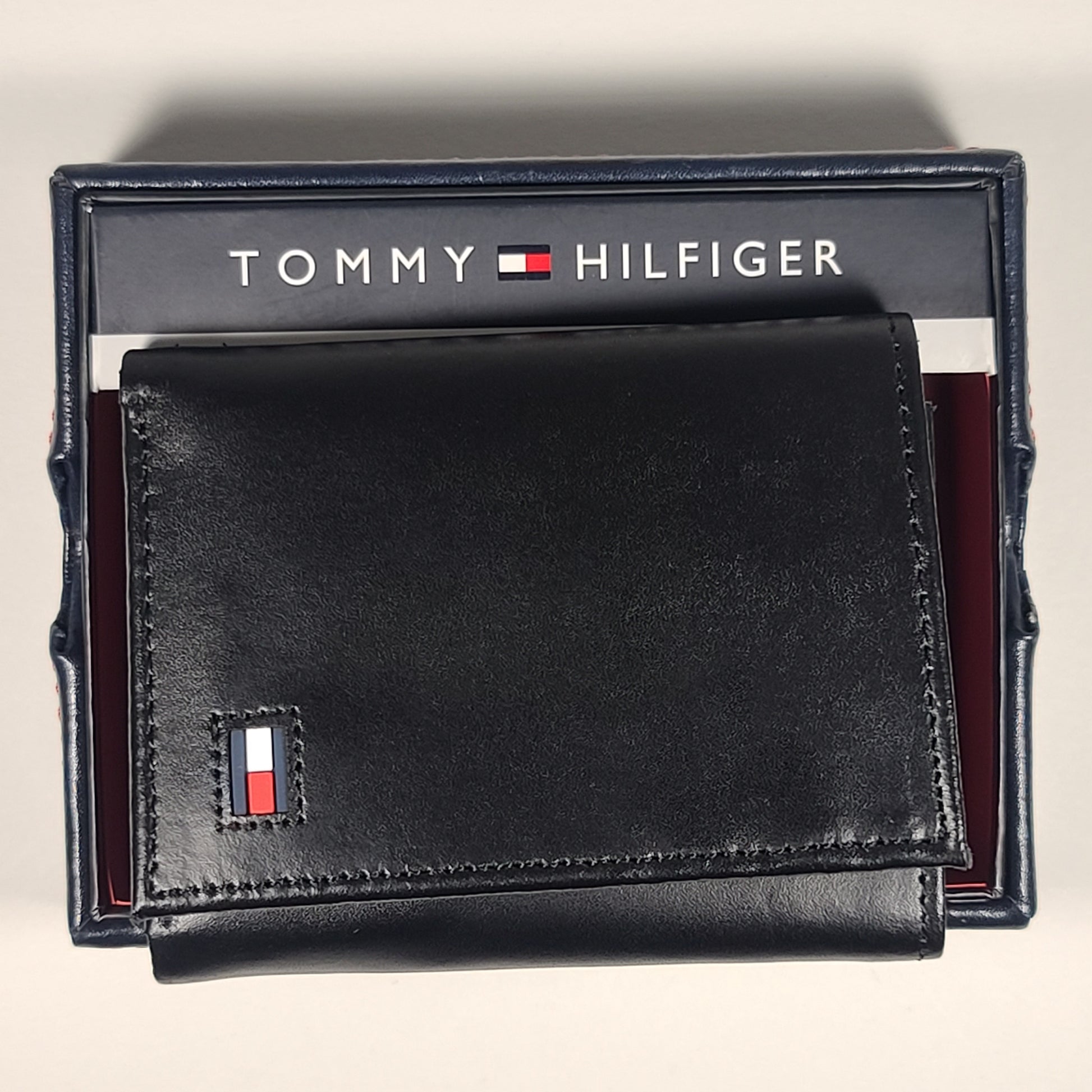
Tommy Hilfiger Orson RFID Bifold Wallet
A classic leather bifold wallet with RFID protection and a removable passcase, designed for organized everyday carry.
2.Best slim/minimalist: Bellroy Hide & Seek. A slim leather bifold with RFID protection and a clean design. It keeps your cards organized without adding much bulk, making it a good choice for everyday carry.
Pros:
Slim and lightweight
RFID protection
Easy card access
Clean, simple design
Cons:
Limited space compared with larger wallets
Stitching may show wear over time

Bellroy Hide & Seek Leather Wallet
A slim leather wallet with a clean bifold design, hidden storage compartments, and organized space for cards and cash.
3.Best with RFID protection: SERMAN BRANDS Bifold with Money Clip. A slim full-grain leather wallet with RFID protection and a built-in money clip. It offers good space for cards and cash without feeling too bulky.
Pros:
Full-grain leather
RFID protection
Built-in money clip
Slim design
Good card capacity
Cons:
Money clip may not suit everyone
Less traditional than a standard bifold

Serman Brands Transformer Wallet
A modern men's wallet designed around practical organization and a compact profile for everyday carry.
4.Best budget pick: Rustic Town Full-Grain RFID Bifold. A budget-friendly full-grain leather wallet with RFID protection, a clean design and solid construction. It's a good option if you want real leather without spending too much.
Pros:
Affordable price
Full-grain leather
RFID protection
Good everyday design
Cons:
May have fewer features than premium wallets
Can feel slightly bulkier when fully loaded

Rustic Town Men's Genuine Leather RFID Wallet
A genuine leather bifold wallet with RFID blocking, multiple card compartments, and a coin pocket for convenient everyday organization.
5.Best splurge/gift pick: Bosca Old Leather Bifold. A premium leather wallet with a classic design and quality craftsmanship. It's a great choice if you want a stylish wallet that can last for years and develop a unique look over time.
Pros:
Premium leather
Classic design
Durable construction
Great for gifting
Cons:
Higher price
May be more than you need for everyday use

Bosca Old Leather Classic Bifold Wallet
A timeless leather bifold wallet with a classic design and dedicated card and ID storage for everyday use.
Common Mistakes When Buying a Leather Wallet
Choosing the brand over quality: Check the leather and stitching instead of focusing only on the logo.
Buying too many card slots: A wallet can become bulky when it's filled with cards you don't really use.
Assuming “genuine leather” means premium: Look for full-grain or top-grain leather if durability is important.
Ignoring the break-in period: Good leather can feel stiff at first but often becomes softer and more comfortable with use.
My suggestion: Choose a wallet based on quality, size and how you'll use it every day.
Final Take
The best leather wallet depends on what you carry every day. A slim card holder is great if you mostly use cards, while a bifold wallet works better if you carry cash or an ID.
For long-term use, full-grain leather is a great choice, while top-grain leather offers good quality at a lower price.
My suggestion: Choose a wallet that fits your daily needs, feels comfortable in your pocket and has strong stitching. Also, check for current deals before buying.
Frequently Asked Questions
It's a reasonable feature to have if it's included at little to no extra cost, since it blocks unauthorized wireless scanning of contactless cards. That said, the real-world risk it protects against is relatively low, so it shouldn't be the deciding factor between two wallets you otherwise like equally.
Full-grain uses the entire hide with its natural texture and ages into a rich patina over time. Top-grain is sanded for a smoother, more uniform look and is generally more affordable while still durable. "Genuine leather" is actually one of the lower grades, made from bonded leftover leather layers and tends to wear out faster despite the reassuring-sounding name.
It depends on how you actually pay for things. If you rarely carry cash and mostly use cards, a slim card holder is usually more comfortable and practical. If you regularly carry cash or want a dedicated ID window, a traditional bifold or trifold wallet still makes more sense.
A well-constructed full-grain leather wallet with good stitching can easily last 5-10 years or more with normal use, often looking better with age as the leather develops a patina. Lower-grade "genuine leather" wallets tend to show wear and start peeling much sooner, sometimes within a year or two of daily use.
A classic black or brown full-grain leather bifold or slim card holder is the safest choice, since neutral colors and simple, classic shapes work with almost any personal style and don't risk feeling too trend-specific.