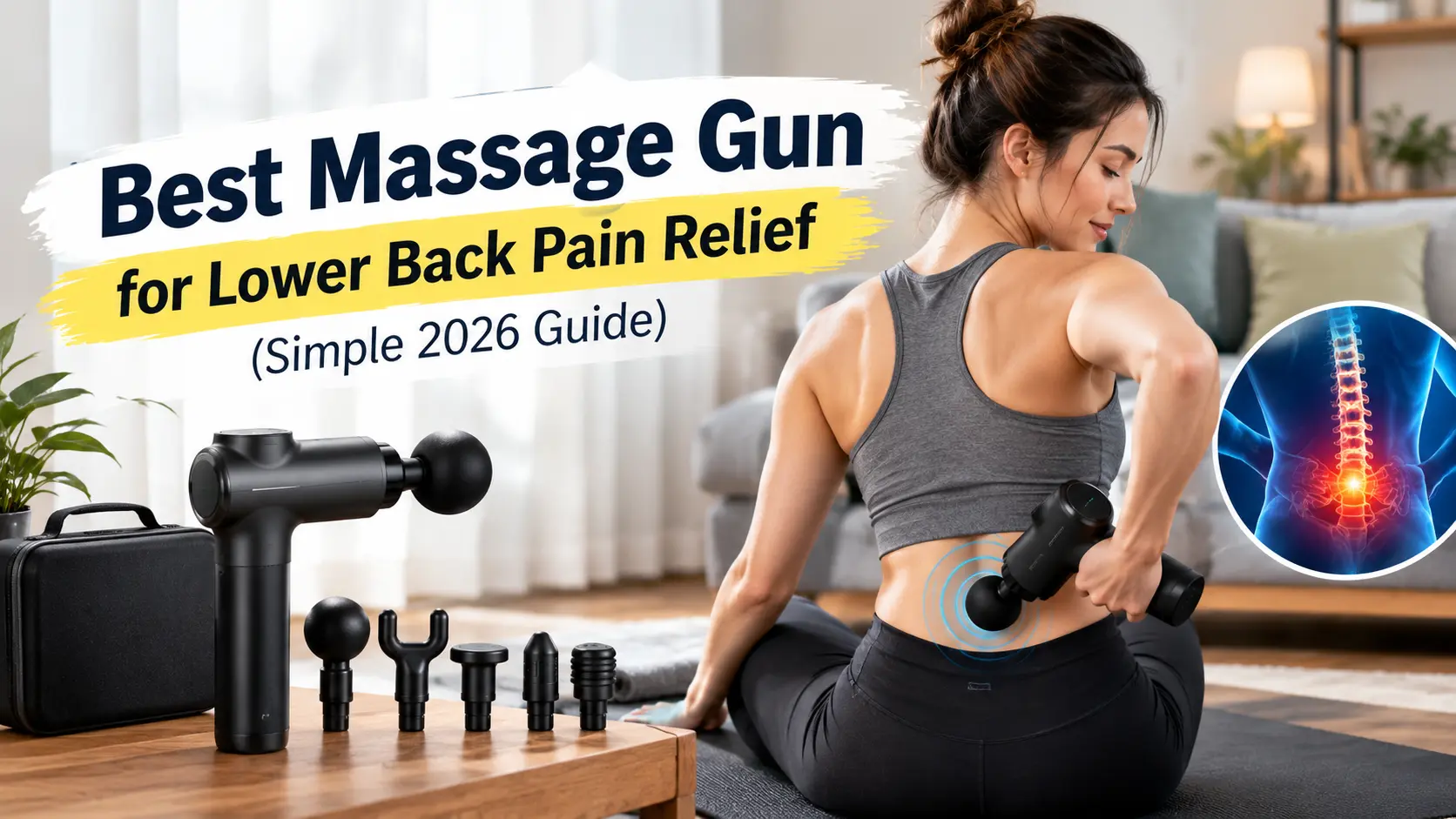
If your lower back feels stiff or sore by the end of the day, you're not alone. It can happen after sitting too long, sleeping awkwardly or spending hours on your feet.
Many people try massage guns for relief. They can be helpful for some people, but they're not right for every situation.
In this guide, we'll explain when a massage gun may help, how to use one safely and what to look for if you are thinking about buying one.
First, What Kind of Back Pain Do You Have?
Not all back pain is the same. Before using a massage gun, think about what your pain feels like.
Tight or stiff muscles: This can happen after sitting, standing or working for a long time. Gentle massage may help with muscle tightness.
Small muscle knots: These are sore, tight areas that may feel tender when pressed.
Pain that travels down your leg: If you also have numbness or tingling, it may involve a nerve. A massage gun may not be the right choice.
Pain after an injury: If your pain started after a fall or injury or isn't improving, it's better to talk to a doctor.
Our suggestion: If you're dealing with simple muscle tightness, gentle massage may be worth trying. If you have pain that travels down your leg, numbness, tingling or pain after an injury, check with a healthcare professional first.
Does It Actually Work?
A massage gun may temporarily help some people with muscle tightness and soreness. It isn't a treatment for every type of back pain.
It may help by:
Relaxing tight muscles
Easing small areas of muscle tension
Making the area feel less stiff
But a massage gun isn't a cure for serious back problems, such as a disc issue or sciatica.
How to Use It on Your Lower Back Safely
Using a massage gun on your lower back needs a little care. The key is to work on the muscles around your spine, not directly on the spine.
Avoid These Areas
Don't use it directly on your spine.
Avoid areas that are bruised, swollen or injured.
Be careful around the sides of your lower back. When in doubt, skip areas that feel sensitive or painful.
A Simple Way to Use It
Start on the lowest speed.
Gently move it over the muscles beside your spine.
Keep it moving instead of holding it in one spot for too long.
Start with a short session of about 1–2 minutes per side.
If you find a tight spot, use gentle pressure for a short time before moving on.
Stop if you feel sharp pain, numbness, tingling or pain traveling down your leg.
What to Actually Look for When Picking One
You don't need the most expensive or powerful massage gun. For lower-back use, focus on a few practical features:
Gentle speed settings: Lower intensity is useful for sensitive areas like the lower back.
Lightweight design: A lighter gun is easier to hold and reach behind your back.
Heat option: Heat may feel relaxing before a massage, if the model includes it.
Quiet motor: A quieter gun is more comfortable to use while relaxing.
Easy-to-reach design: Choose a shape and handle that make it easier to reach your lower back.
When to skip the massage gun and see a doctor
Please see a doctor instead of trying a massage gun if you have:
Pain that runs down one or both legs, especially with numbness or tingling
Pain after a fall or injury
Pain with fever or unexplained weight loss
Pain that isn't getting better after two weeks
Many cases of back pain improve with time and simple self-care, but the cause isn't always obvious. If your symptoms are unusual, severe or getting worse, get medical advice.
Don't forget the actual cause
A massage gun may help with the tightness or soreness, but it doesn't fix every cause of back pain.
Get up and move every 30-45 minutes if you sit a lot
Check your desk chair and screen height
Stay active and include gentle strengthening exercises that support your back.
Watch how you sleep (stomach sleeping is a common culprit)
Think of the massage gun as daily maintenance, not a total fix.
A Few Simple Options If You Want to Try One
If you're thinking about trying a massage gun, you don't need to compare dozens of models. Here are three simple options with different features and price points.
These are not ranked as best or worst. Think of them as three different choices for different needs.
1. RENPHO Active Thermacool Mini Massage Gun
This is a small, lightweight massage gun that's easy to carry. It comes with a heat-and-cold head and five speed levels, so you can adjust it based on what feels comfortable.
It's a practical option if you want something you can keep in your bag, use at your desk or take while traveling.
Best for: Portability and everyday use
Pros:
Small and easy to carry
Heat-and-cold attachment
Five speed levels
Convenient for travel or everyday use
Cons:
Smaller design may not feel as powerful as a full-size massage gun
You may prefer a larger model for longer sessions
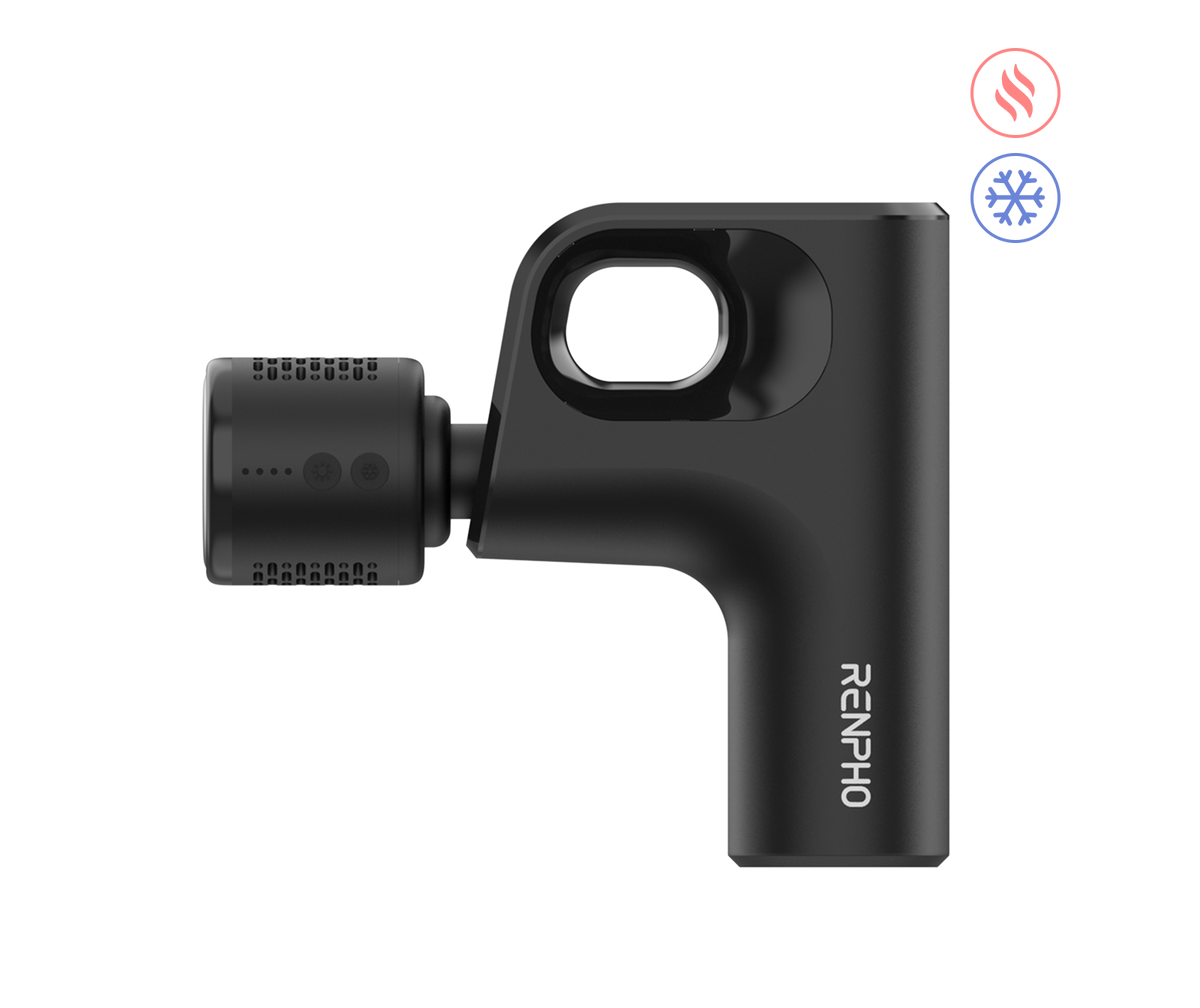
RENPHO Active Mini Thermacool Massage Gun
A compact massage gun with dual-temperature therapy, 8mm impact depth, and five massage heads for a convenient recovery routine.
2. RENPHO Active Massage Gun With Heat & Cold Head
If you want a full-size massage gun with more features, this option adds a swappable heat-and-cold head, app connection, guided routines and a quieter motor.
It can be a useful middle-ground if you want more than a basic massage gun but don't want to go for something overly complicated.
Best for: More features and stronger massage
Pros:
Full-size design
Heat-and-cold attachment
App connection with guided routines
Five speed levels
Quieter motor
Cons:
Larger and less portable than the mini version
You may not need the extra features if you only want basic massage

RENPHO Active+ Thermacool Massage Gun
A deep-tissue massage gun with heat and cold therapy, five speeds, five massage heads, and a quiet brushless motor.
3. RENPHO Active Massage Gun
If you don't think you'll use the temperature feature, this version keeps things simpler. It has five speed levels, app connection and a quiet motor without the heat-and-cold attachment.
It's worth considering if your main goal is simply to have a massage gun for occasional muscle relief.
Best for: Simple massage without heat and cold
Pros:
Simple to use
Five speed levels
App connection
Quiet motor
No extra temperature feature to worry about
Cons:
Doesn't include the heat-and-cold attachment
Less suitable if you specifically want heat or cold during your routine
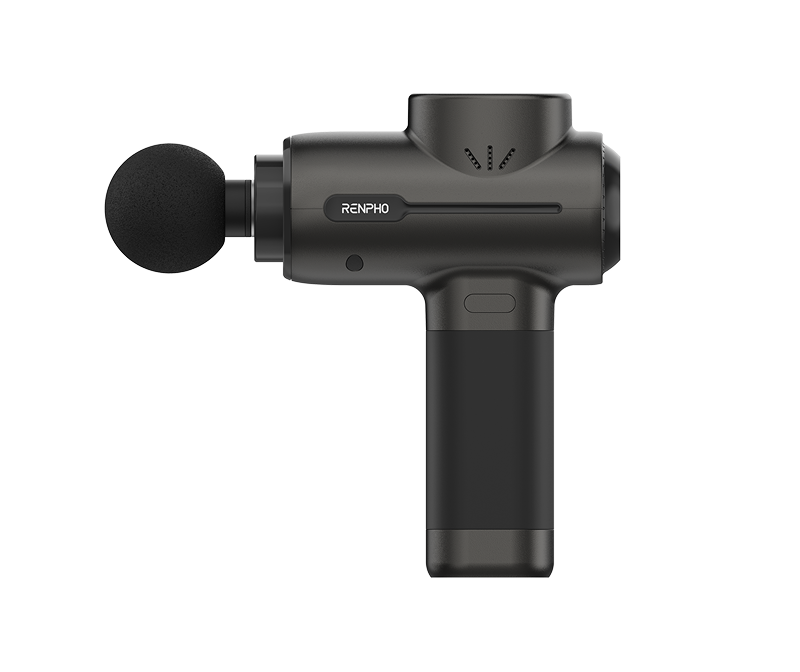
RENPHO Active+ Massage Gun
A handheld percussion massage gun with multiple attachment heads and adjustable massage settings for everyday muscle care.
Which One Should You Consider?
The easiest way to narrow it down is to think about how you plan to use it.
Want something small for travel? The mini version makes more sense.
Want more features, including heat and cold? The full-size heat-and-cold version gives you those extras.
Only want basic massage? The standard full-size version keeps things simpler.
Whichever option you choose, remember the safety tips above: start with a low setting, avoid using the gun directly on your spine, keep sessions short and combine massage with gentle movement.
Final Takeaway
A massage gun can be useful when your lower back feels tight, stiff or sore from everyday activity. But it isn't the right solution for every type of back pain.
If you decide to try one, start with the lowest speed, use gentle pressure, stay on the muscles beside your spine and keep sessions short. Stop if you feel sharp pain, numbness, tingling or pain traveling down your leg.
Frequently Asked Questions
It can help with muscle tightness and knots. But if the pain comes from a nerve or injury, it's better to get medical advice.
Avoid using it directly on your spine. Also avoid the areas around your kidneys. When in doubt, use it gently or skip the area.
Start with a short session, around 1–2 minutes per side, and stop sooner if it feels uncomfortable.
Yes. Using too much pressure or using it on the wrong area can make things worse. If pain shoots down your leg, stop using it.
Start on the lowest setting. If that feels comfortable, you can slowly increase the speed.