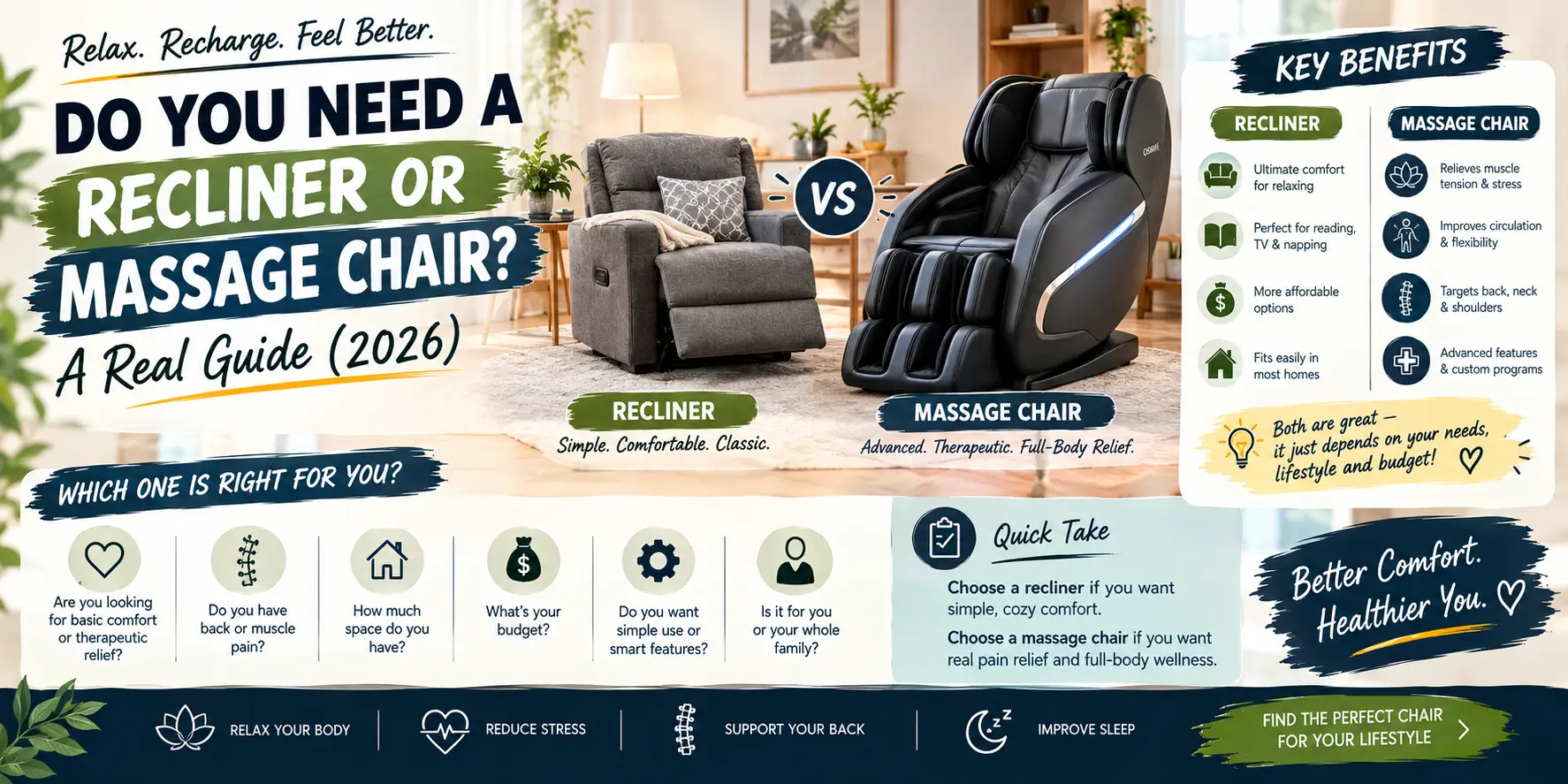
After a long day, you sit down to relax, but your back, neck, or shoulders still feel tight. If this happens often, your seating may not be giving your body the support it needs.
Many sofas and chairs are designed to look good, but not always to provide real comfort. Better support can help reduce pressure on your body and make it easier to relax.
In this guide, we'll look at why proper seating matters, what can cause everyday discomfort, and how options like recliners, massage chairs, or simple habit changes may help you feel more comfortable.
Why Your Chair Can Affect Comfort
A normal chair or sofa holds you in one fixed position. Your spine has to do all the work of staying upright, hour after hour. Over time, that adds up:
Your lower back rounds forward, straining the muscles that are supposed to support your spine
Your shoulders and neck stay tense, because there's nothing helping them release
Blood flow to your legs slows down the longer you sit without adjusting position
The one-direction setup means twisting your neck and torso just to face a screen or a conversation
None of this is really "just aging" or "just how sitting feels." It's a mechanical problem — your body needs support your furniture isn't giving it.
Why Reclining Actually Matters (Not Just Comfort)
Reclining isn't just a lazy posture — it changes how your body handles weight and pressure:
Shifting your legs up and your back to a slight angle takes pressure off your spinal discs, which is why a good recline often eases lower back tension within minutes
Zero-gravity positioning — where your legs sit level with or above your heart — redistributes your body weight evenly across the seat instead of concentrating it on your lower back and hips
Changing position throughout the evening (rather than sitting rigidly upright) keeps blood circulating and prevents the stiffness that builds up from staying still
This is the actual reason recliners help — not because they are extra comfy, but because they change the physics of how your body is supported.
What Massage Features Are Actually Doing
A massage chair isn't a gimmick if it's solving a real problem: muscle tension that builds up faster than it releases on its own. Here's what the common features are actually for:
Roller or shiatsu-style kneading mimics the pressure a person's hands would apply to work out a knot in your back or shoulders
Heat therapy increases blood flow to tight muscles, which helps them relax faster than pressure alone
Airbag compression (used around the arms, calves, or hips) squeezes and releases rhythmically, similar to how a sports recovery sleeve works on tired legs
Automatic body scanning/shoulder detection exists because a fixed massage pattern doesn't fit every body — without it, the rollers often hit the wrong spot entirely
Not everyone needs all of these. Someone with mostly lower-back tension doesn't need the same chair as someone with neck and shoulder tightness.
How to Figure Out What You Actually Need
Before shopping for anything, it helps to get specific about your own problem:
Ask yourself:
Is the tension mostly in one area (neck, lower back) or all over?
Do you need this chair for short daily use, or long stretches (working from home, evenings)?
Is space a constraint — apartment, shared room, small living area?
Is this about active pain relief, or just wanting a genuinely comfortable place to sit?
Your honest answers here matter more than any product spec sheet. Someone dealing with all-over tension after physical work has a very different need than someone who just wants a better reading chair.
Simple Reclining Chair vs. Full Massage Chair vs. Compact Option
Broadly, seating in this category falls into three tiers:
Simple swivel/reclining chairs — solve the "my chair doesn't move with me" problem. Good if your main issue is stiffness from staying in one fixed position, not deep muscle pain.
Full massage chairs (zero-gravity, SL-track, body scanning) — solve chronic tension and recovery needs. Best if you deal with regular back, neck, or shoulder pain and have the space and budget for it.
Compact massage recliners — a middle ground. Adds real massage features to a smaller frame, for people who want relief but are working with limited space or budget.
None of these is objectively better — the right one depends entirely on your answers from the section above.
Three Recliner Options to Consider
Here are three examples that represent different approaches to home seating.
360° Swivel PU Leather Recliner
This type of manual recliner focuses on everyday seating rather than massage technology.
Its swivel function allows you to turn the chair, while the adjustable backrest and footrest provide different sitting positions.
Pros
Simple design
360° swivel functionality
Adjustable backrest
Footrest for relaxation
No complicated massage controls
Cons
No massage function
No heat feature
Requires manual adjustment
Best for: Everyday comfort when you don't need massage features.
Our suggestion: Choose a simple recliner if your main goal is a comfortable place to sit, read, watch TV, or relax.
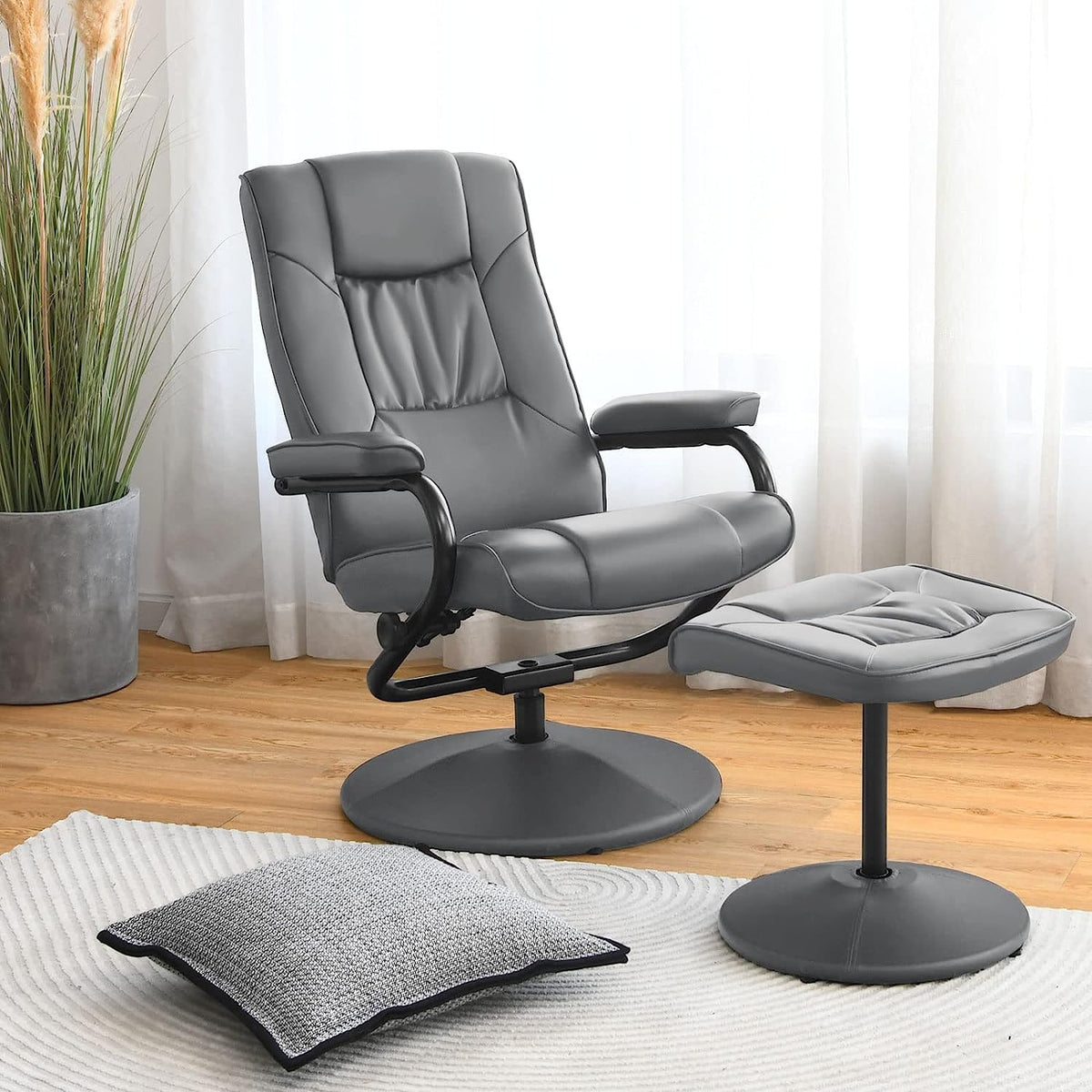
360° Swivel PU Leather Recliner Chair
A comfortable swivel recliner with an adjustable backrest and footrest, designed for relaxing, reading, watching TV, or everyday home use.
Full Body Zero Gravity Massage Chair
A full-size massage chair is designed for people who want a more feature-rich relaxation experience.
The example used for this article includes an SL-track massage system, zero-gravity positioning, heat, and shoulder detection.
Pros
Full-body massage features
Reclining function
Multiple massage settings
Heat function
Shoulder-detection feature
Cons
Larger footprint
More expensive than a basic recliner
More controls and features to learn
Best for: People who specifically want a full massage-chair experience and have enough room for it.
Our suggestion: Before buying, measure the chair in both upright and reclined positions.
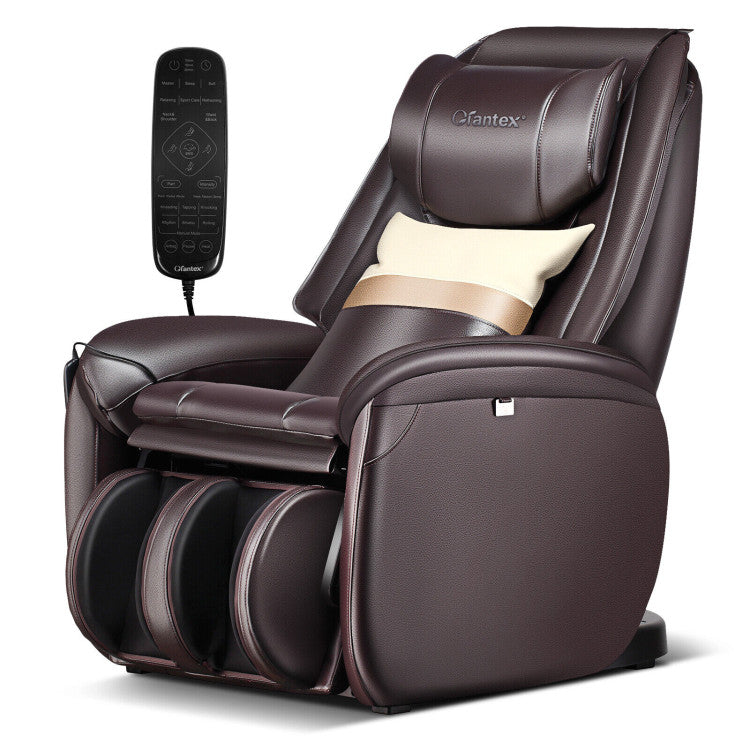
Full-Body Zero-Gravity SL-Track Massage Chair
A full-body electric massage chair with zero-gravity positioning, an SL-track design, reversible footrest, and automatic shoulder detection for a relaxing home setup.
360° Swivel Massage Lounge Chair
A compact massage recliner offers a middle ground between a standard recliner and a large massage chair.
The example provided for this article combines a swivel recliner design with massage settings and a remote control.
Pros
Combines reclining and massage
Swivel design
More compact than many full massage chairs
Remote-controlled settings
Suitable for everyday relaxation
Cons
Massage coverage may be more limited than a full massage chair
May not offer as many features
Still requires more space than a basic chair
Best for: People who want massage functionality without choosing a full-size massage chair.
Our suggestion: This is worth considering if you want a middle ground between basic comfort and a feature-rich massage chair..
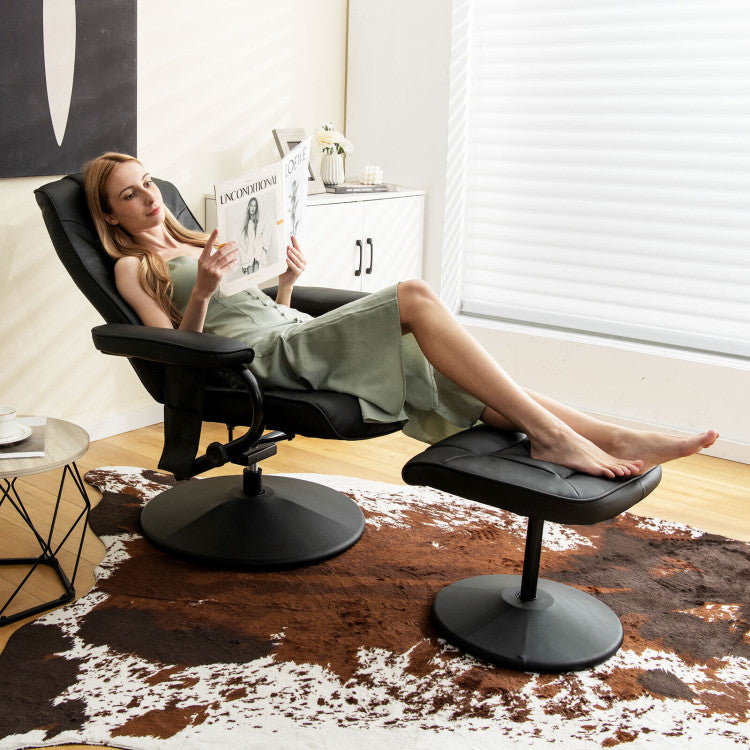
360° Swivel Faux Leather Massage Recliner
A versatile recliner featuring a 360-degree swivel design, adjustable backrest, massage function, and remote control for convenient home relaxation.
A Look at Three Real Options
To make this concrete, here's how three actual products map to the three tiers above.
Type | Product | Best For |
Simple swivel recliner | 360° Swivel PU Leather Recliner | Everyday comfort, no chronic pain |
Full massage chair | Zero Gravity SL-Track Massage Chair | Ongoing back/neck/shoulder tension |
Compact massage recliner | 360° Swivel Massage Lounge Chair | Small spaces, moderate budget |
A Quick Note on Medicare and Lift Chairs
The chairs mentioned above do not have a motorized lift feature. Lift chairs are designed to help people stand up more easily and have different Medicare rules.
If you need a lift chair, check our guide on Medicare and lift chair recliners to learn about coverage and eligibility.
Putting It All Together
Your chair should do more than just look good — it should also keep you comfortable and supported.
Before buying, think about where you feel tension, how often you'll use the chair, your available space, and your budget.
Once you know what you need, choosing between a regular recliner, massage chair, or compact option becomes much easier.
Final Takeaway
You don't automatically need a massage chair just because you experience occasional stiffness after sitting.
For many people, the best starting point is a comfortable recliner, regular movement, and a better sitting setup.
A massage chair becomes more interesting when you specifically want massage features and expect to use them frequently.
Choose based on your actual needs — not the number of features on the product page.
Frequently Asked Questions
If you mainly want comfortable seating and the ability to change your sitting position, a regular recliner may be enough. A massage chair makes more sense when massage features are something you genuinely want to use regularly.
Reclining changes your sitting position and distributes your body weight differently. Some people find this more comfortable than sitting upright. However, reclining isn't a treatment for an underlying medical condition.
Consider three things: space, budget, and how many massage features you actually want. A full massage chair generally offers more features, while a compact massage recliner can be easier to fit into a smaller room.
No. A massage chair can be used for relaxation and may help some people feel temporarily more comfortable, but it isn't a substitute for professional evaluation or treatment.
Not necessarily. Zero-gravity positioning can feel comfortable because it changes how your body is supported, but it isn't automatically better for everyone and does not treat every cause of back pain.
Not necessarily. People with certain medical conditions, recent injuries, or other health concerns should check with a healthcare professional before using massage or heat features.
Follow the manufacturer's recommended session length. Start with a comfortable setting rather than the strongest intensity, and stop if the massage causes pain or makes your symptoms worse.