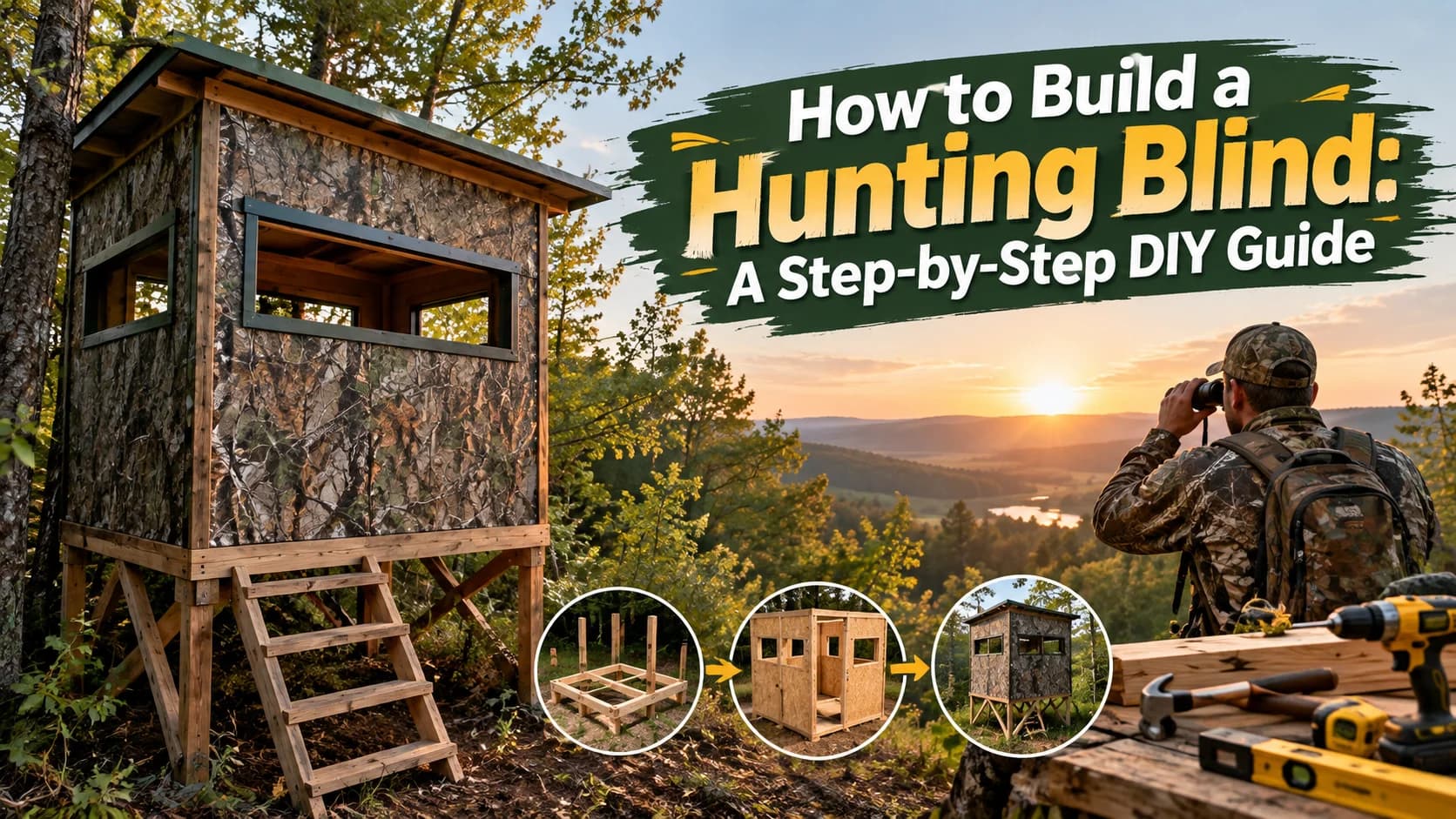
A hunting blind helps you stay hidden from animals by blocking sight, sound and scent. It can help you stay concealed and make your hunting setup more comfortable.
The good news is that building your own hunting blind is simple and affordable. You dont need advanced tools or construction skills. With the right materials and a basic plan, you can build a strong blind in a weekend.
This guide covers the best blind types, the materials you'll need and the steps to build one that lasts for years.
Why Build Your Own Hunting Blind Instead of Buying One
Store-bought hunting blinds are easy to use, but they can be weak and expensive. Their fabric may tear, zippers can break and their design may not blend well with your hunting area.
A homemade blind can be cheaper, stronger and made to fit your land. You can also choose the window height, ventilation and design to help you stay hidden and comfortable.
Materials You will Need
The exact list depends on your design, but a basic wooden ground or box blind typically requires:
Pressure-treated plywood (for walls and roof)
2x4 lumber (for the frame)
Exterior wood screws or nails
Hinges and a latch (for a door or window flaps)
Camouflage paint or a spray-on natural finish
Roofing material (shingles or a tarp) for weatherproofing
Window screening or shoot-through mesh
Foam padding or carpet scraps (to deaden sound on the floor and window edges)
If you're building an elevated blind, add:
4x4 posts for stilts
Concrete or ground anchors
A ladder or stairs
Most of this is available at any hardware store and secondhand plywood or pallet wood works fine for a budget build — just make sure it's structurally sound.
Tools You will Need
Circular saw or handsaw
Cordless drill/driver
Tape measure and level
Hammer
Staple gun (for mesh or fabric)
Paintbrush or spray gun
How to Build a Ground Hunting Blind
1. Choose the Location
Pick a spot with natural cover and good visibility. Consider wind direction and nearby game trails.
2. Plan the Size
A small blind can be around 4x4 feet for one person. Make it larger if two people will use it.
3. Build the Frame
Use 2x4s to build a simple wall and roof frame. Keep the frame square and stable.
4. Add Walls and Roof
Attach plywood panels to the frame and leave space for shooting windows. Cover the roof with shingles, roofing felt or a heavy-duty tarp.
5. Add Shooting Windows
Place the windows at a comfortable height for your shooting position. Keep openings dark and quiet.
6. Camouflage the Blind
Match the exterior to the surrounding vegetation. Natural brush can help break up the blind's outline.
7. Make It Comfortable
Use carpet or foam on the floor to reduce noise. Pad hard edges around the windows to prevent unwanted sounds.
8. Let It Blend In
If possible, place the blind before the season so wildlife has time to get used to it.
Pro Tips for a Blind That Actually Works
Scent control matters more than looks. Ventilate the blind with small gaps or vents near the top toUse small vents near the top to improve airflow and prevent odors from building up inside.
Keep the silhouette broken up. A perfectly rectangular structure against open sky stands out brush it in on at least two sides.
Test your shooting windows before season. Sit inside and go through your full draw or shoulder motion to make sure nothing's obstructed.
Don't overbuild the first one. A simple, functional blind you actually finish beats an ambitious one that's still half-built in October.
If a full DIY build isn't in the cards this season, a mid-range pop-up or panel blind can get you most of the way there — especially paired with a few upgrades like a padded shooting rest, blackout window covers and scent-control spray. It's worth comparing a few models for wind resistance and fabric weight before buying, since the cheapest options tend to be the first to tear.
Hunting Blinds to Buy Instead of Building Your Own
If a full DIY build isn't in the cards this season, a solid pop-up or panel blind can get you most of the way there in minutes instead of a weekend. Here are three popular options worth comparing:
HUNTSEN 3-Panel Pop-Up Ground Blind
A lightweight three-panel blind built for turkey and general ground hunting, offering silent windows and quick setup for hunters who move locations often.
Pros:
Quick and easy setup
Quiet windows help reduce noise
Lightweight and easy to carry
Cons:
Less coverage than a full pop-up blind
Not as protective in heavy rain or strong wind

HUNTSEN 3-Panel Hunting Blind
Lightweight 3-panel hunting blind designed for quick setup, easy carrying, and reliable concealment in outdoor hunting environments.
Ameristep Doghouse Ground Blind
One of the most established names in ground blinds, the Doghouse is a full pop-up blind with a 60x60 footprint and enough headroom to stand in.
Pros:
Helps hide shadows and movement
Strong fabric for wind and rain
7 shooting windows plus a large front window
Tall enough to stand inside
Cons:
Heavier and bulkier to carry
Takes longer to set up
More expensive than basic panel blinds

Ameristep Doghouse Hunting Blind
Compact pop-up hunting blind with a lightweight design, useful for hunters who want portable concealment and quick setup in the field.
Lenotos 3-Panel Pop-Up Ground Blind
A budget-friendly panel blind aimed at deer, turkey and duck hunters who want quick concealment without a big investment.
Pros:
Affordable compared to box-style blinds
Sets up quickly with stakes and tie-downs
Works well in woods, fields and water areas
Cons:
Polyester is less durable than heavy-duty fabrics
Less coverage than a full 360° blind
Simple window design

Lenotos 3-Panel Hunting Blind
Portable 3-panel hunting blind featuring a lightweight design and carrying-friendly setup for convenient concealment during outdoor hunts.
Final Thoughts
A homemade hunting blind can be cheaper and easier to customize than a store-bought one. Keep the design simple, control scent and sound and let the blind blend into the area before hunting season.
Frequently Asked Questions
A basic wooden blind can cost around $50–$150 in materials. Using reclaimed wood or materials you already have can lower the cost.
Use carpet or foam on the floor and pad hard surfaces around shooting windows. This can help reduce noise when you move or adjust your gear.
Keep food, clothing and scented products out of the blind. Good ventilation can also help reduce trapped odors before a hunt.