Shopping for a baby stroller can feel overwhelming because there are so many options available. From lightweight and jogging strollers to travel systems and double strollers, it's easy to get confused.
The good news is that you don't need the best stroller you need the one that fits your lifestyle, budget and your baby's needs. A stroller that works perfectly for one family may not be the right choice for another.
This guide will help you understand what to look for and how to choose the right baby stroller with confidence.
Start With Your Baby's Age and Stage
Not every stroller works for every age. This is the first filter, before you even think about brands or budget.
Newborns (0–6 months): Need a stroller that reclines fully flat or comes with a bassinet attachment, since infants can't sit upright or support their own head. Many parents pair a car seat with a compatible stroller frame (a "travel system") for this stage.
Infants who can sit up (6–12 months): Can use a stroller seat with a partial recline. This is when many families switch from a bassinet-style setup to a standard seat.
Toddlers (1–3+ years): Need a sturdier seat, a higher weight limit and often benefit from a stroller with more recline options for naps on the go.
If you plan to use one stroller from birth through toddlerhood, look for a convertible or 3-in-1 model built to grow with your child, rather than buying separate strollers for each stage.
Match the Stroller Type to Your Lifestyle
Once you know your baby's stage, think about how and where you'll actually use the stroller day to day.
Travel systems (stroller + infant car seat) Best for parents who drive often. The car seat clicks directly into the stroller frame, so you can move a sleeping baby from car to stroller without waking them.
Lightweight/umbrella strollers Best for parents who prioritize portability — flying, public transit or quick errands. These fold small and are easy to carry, but usually offer less padding and storage than full-size strollers.
Jogging strollers Best for active parents who run or walk on uneven terrain. Look for three wheels, front-wheel lock and solid suspension. Not recommended for infants under about 6–8 months without full head/neck support.
All-terrain strollers Best for parents who live somewhere with gravel paths, trails or uneven sidewalks. Larger wheels and better suspension handle rough ground more smoothly than standard city strollers.
Double/twin strollers Best for parents of twins or two close-in-age children. Choose between side-by-side (easier to steer, wider for doorways) and tandem/in-line (narrower, but can be heavier and harder to maneuver).
Compact/city strollers Best for apartment living or frequent transit use — these are designed to fold small and fit in tight spaces like elevators or trunk corners.
Check the Features That Actually Matter
Marketing copy can make every stroller sound essential. Here's what's actually worth checking before you buy.
Weight: Lighter strollers (under ~15 lbs) are easier to lift into a car or carry up stairs, but often trade off storage and durability. Full-size strollers offer more comfort features but are harder to transport.
Fold mechanism: A one-hand fold is a genuine convenience when you're also holding a baby. Check how compact it folds and whether it stands on its own when folded (useful for storing it upright).
Wheel type: Smaller wheels are fine for smooth sidewalks and malls; larger wheels with suspension handle parks, trails and uneven pavement far better.
Car seat compatibility: If you already own an infant car seat, check the stroller's compatible brands/models before buying — adapters aren't universal.
Storage basket: A larger under-seat basket matters more than most new parents expect, especially for diaper bags and grocery runs.
Recline positions: Multiple recline angles support naps and different ages more comfortably than a single fixed position.
Handlebar height/reversibility: Adjustable or reversible handlebars help taller parents avoid back strain and let baby face you or face forward.
Safety certifications: Look for compliance with recognized safety standards (such as ASTM or JPMA certification in the US) and check for any active recalls before purchasing, especially secondhand.
Quick Decision Checklist
Before buying a stroller, make sure it checks all the boxes below:
Fits your baby's current age and stage (or can adapt as they grow)
Matches your lifestyle and daily routine, whether that's driving, walking, jogging or using public transportation
Folds easily and fits your available storage space, such as a car trunk, closet or apartment hallway
Is compatible with your infant car seat, if needed
Fits your budget without compromising on safety and quality
Meets recognized safety standards and has no active recalls
Top Momcozy Stroller Picks
If you're shopping by stroller type, here are three Momcozy models worth a look — each built for a different lifestyle covered above.
1. Momcozy ChangeGo Baby Stroller (Convertible Single-to-Double-to-Wagon)
A modular, all-in-one stroller that adapts from a single stroller to a double stroller to a wagon, supporting up to 23 configurations with additional accessories. It includes a full bassinet for newborns plus a toddler seat rated up to 50 lbs, large 10/12 wheels with all-wheel suspension, a 5-height adjustable handlebar and a 5-point harness. Built for families who want one stroller to grow with them from birth through age six — including families expecting a second child.
Pros:
Genuinely grows with your family — infant bassinet through toddlerhood, single to double
Large wheels with strong suspension handle curbs and uneven ground smoothly
Roomy, full-featured toddler seat with multi-position recline and leg rest
Adjustable handlebar height suits parents of different heights
Cons:
Heavier and bulkier than a standard stroller (around 24 lbs for the frame alone), so it's not ideal for air travel or frequent carrying up stairs
Extra configurations (wagon mode, second seat) require accessories sold separately
Higher price point than a basic single stroller
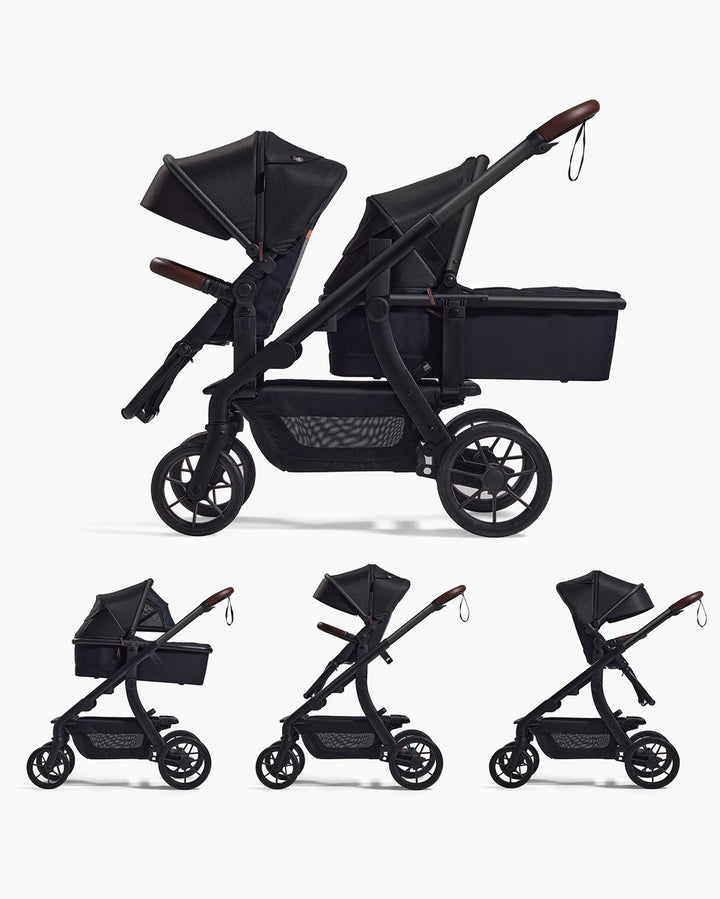
Momcozy ChangeGo Baby Stroller – Best Convertible Travel System
A versatile stroller designed for growing families with multiple configuration options, premium comfort features, spacious storage, and smooth maneuverability. Ideal for parents seeking a long-term stroller solution from infancy through toddlerhood.
2. Momcozy TuckGo Lightweight Stroller
A compact, travel-focused stroller weighing about 14.4 lbs, designed for errands, flights and everyday outings rather than daily infant use. It offers a three-position recline, adjustable footrest, UPF 50+ canopy, four-wheel suspension, a 5-point harness and a one-hand fold that collapses down to a carry-on-friendly size, along with an included travel bag.
Pros:
Noticeably lighter and easier to carry than full-size strollers
Compact fold is genuinely travel- and transit-friendly
Roomy seat and canopy despite the small folded footprint
Suspension performs well on uneven sidewalks, not just smooth floors
Cons:
Not designed for newborns — best suited for babies around 6 months and up
Recline doesn't go fully flat, so it's not ideal for long naps
No built-in parent organizer, cup holder or phone pocket
Some users report the unfold mechanism needs a couple of tries to lock in
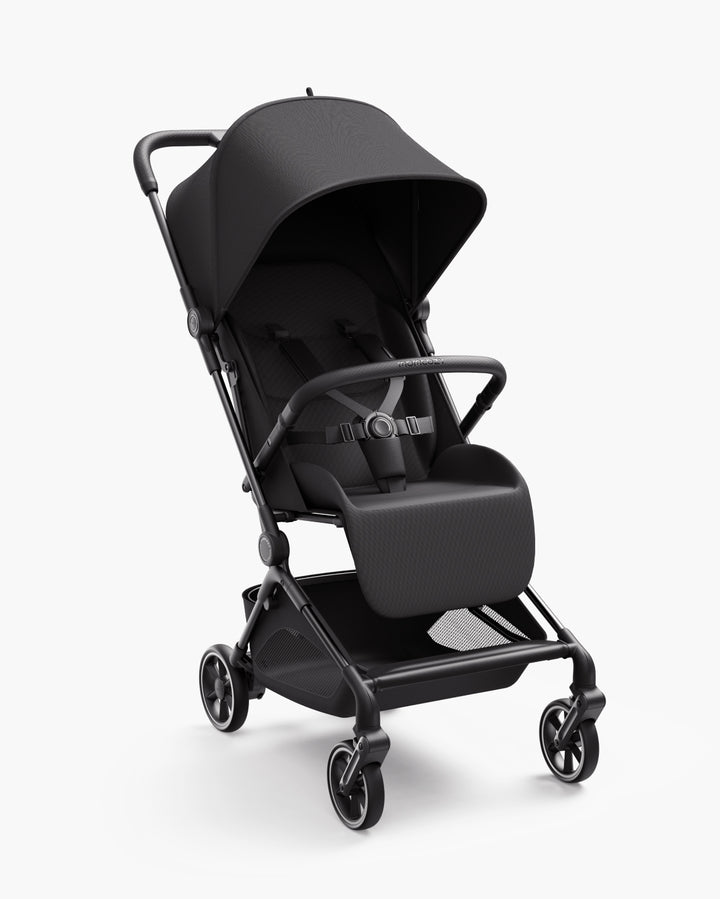
Momcozy TuckGo Lightweight Stroller – Best Overall Travel Stroller
Compact and travel-friendly stroller weighing just 14.4 lbs with one-hand folding, 3-position recline, UPF 50+ canopy, 4-wheel suspension, and carry-on compatible dimensions. Perfect for everyday outings and family travel.
3. Momcozy TuckGo Carbon Fiber Travel Stroller
A carbon-fiber-frame variant of the TuckGo line, built specifically to shave down weight even further for parents who prioritize portability above everything else — think frequent flyers or car-free city living. It follows the same lightweight-travel-stroller category as the standard TuckGo, with a compact fold designed for trunks, closets and airline overhead bins.
Pros:
Carbon fiber frame trims weight below standard aluminum-frame travel strollers, making it easier to lift and carry one-handed
Compact folded size is well-suited to small cars, apartments and cabin storage
Shares the practical, travel-first design philosophy of the TuckGo line
Cons:
Carbon fiber frames typically cost more than aluminum equivalents, so expect a premium over the standard TuckGo
Like other ultra-light travel strollers, it likely trades off some storage capacity and padding for weight savings
Best treated as a secondary or travel-specific stroller rather than an everyday, do-everything option
Note: exact weight and pricing for this specific carbon fiber variant weren't independently verifiable at the time of writing — check the current product page for up-to-date specs before buying.
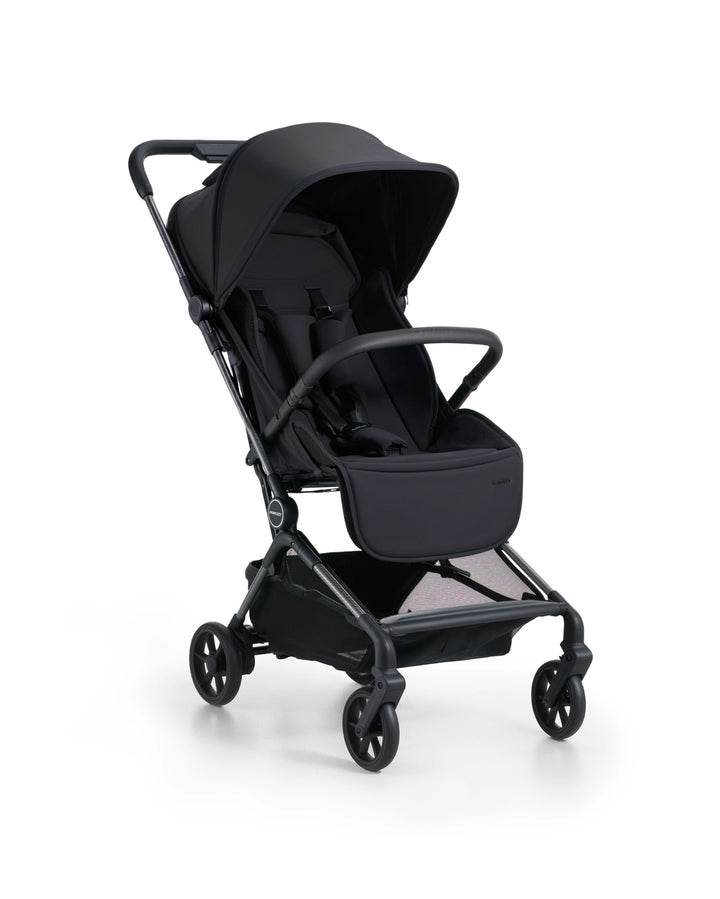
Momcozy TuckGo Carbon Fiber Travel Stroller – Premium Lightweight Pick
Premium carbon fiber stroller weighing only 13.95 lbs with a magnetic buckle, all-season reversible seat, one-hand fold, UPF 50+ canopy, and compact carry-on-friendly design. Built for frequent travelers who want maximum portability and comfort.
Common Stroller-Buying Mistakes to Avoid
Buying based on looks alone. A stylish stroller that's too heavy for your daily routine will end up sitting in the garage.
Skipping the car seat compatibility check. Not all car seats click into all stroller frames — always verify before buying either separately.
Ignoring the fold test. If possible, try folding and unfolding a stroller in-store. A "quick fold" on paper isn't always quick in practice.
Overlooking your storage space. A full-size stroller may not fit in a small trunk, apartment hallway or elevator — measure your space first.
Assuming one stroller has to do everything. Many families end up happiest with two strollers (e.g., a travel system for daily use plus a lightweight umbrella stroller for travel) rather than forcing one stroller to cover every scenario.
Final Thoughts
The best baby stroller is the one that fits your baby's age, your daily routine and your budget. By focusing on safety, comfort and the features you'll actually use, you can choose a stroller with confidence and avoid spending money on features you don't need.
Frequently Asked Questions
Newborns can use a stroller from birth if it reclines fully flat or includes a compatible bassinet or infant car seat attachment.
A travel system combines a stroller with a compatible infant car seat, allowing parents to move a sleeping baby from car to stroller without disruption.
Jogging strollers are ideal for active parents who run or frequently use uneven terrain, but they are not necessary for everyday walking.
Weight, fold mechanism, wheel type, storage basket, recline positions, car seat compatibility, and safety certifications are among the most important features
Most families can find a quality stroller in the $150–$400 range, depending on features and versatility.